

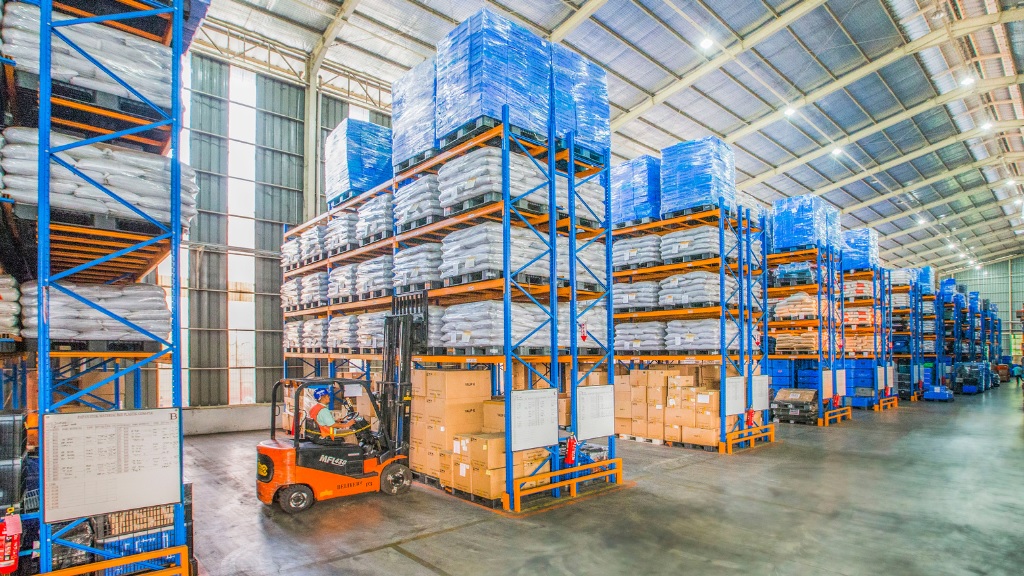
Pallet racking transforms underutilized vertical air space into prime commercial storage, doubling or tripling usable capacity within your existing facility footprint. Running out of warehouse floor space rarely means you need to buy or lease a larger building. Most storage facilities operate well below their actual volumetric potential because inventory sits directly on the floor or on short, inefficient shelving. By shifting your storage strategy upward rather than outward, industrial heavy-duty pallet racking Los Angeles eliminates the astronomical overhead costs, operational downtime, and logistical headaches associated with expanding or relocating your business.
Capitalizing on Unused Vertical Airspace
Every warehouse is leased or purchased by the total square footage of the floor, but operational potential is actually dictated by overall cubic volume. Floor-stacking pallets cap your storage height at a safe stacking level, leaving vast amounts of empty space between the top tier of goods and the ceiling trusses. Heavy-duty steel uprights and structural beams bridge this gap safely, allowing facilities to utilize every available foot of vertical clearance right up to safety fire sprinkler clearances.
Installing structured pallet systems converts empty headroom into organized, accessible inventory slots. Instead of spreading merchandise horizontally across valuable floor space, high-density racking allows you to store inventory vertically. This structural transition increases total pallet positions without adding a single extra square foot to your physical real estate footprint.
Eliminating the Extreme Financial Strain of Relocation
Expanding your operations by leasing a larger building or constructing a physical facility expansion represents a massive capital expenditure. Aside from lease rates and construction costs, moving a business involves hidden line items like site surveys, local permits, business downtime, and freight transport. Upgrading your warehouse layout through custom pallet racking achieves the same expansion capacity at a fraction of the cost, preserving working capital for revenue-generating inventory and labor.
Beyond initial setup expenses, remaining in your current facility avoids recurring monthly cost increases. Larger facilities mean higher utility bills, elevated property taxes, expensive maintenance schedules, and increased insurance premiums. Optimizing your current footprint with engineered racking delivers an immediate return on investment by suppressing ongoing fixed overhead costs.
Enhancing Inventory Accessibility and Visual Management
Density without accessibility creates operational bottlenecks, slowing down order fulfillment and creating extra work for warehouse staff. Selective pallet racking systems give forklift drivers direct access to every single pallet position without requiring them to shift surrounding stock. This 100 percent selectivity keeps material handlers moving efficiently, reducing labor hours and preventing product damage caused by constant reshuffling.
Organized rack structures also transform visual inventory management and inventory auditing procedures. Stock becomes instantly visible and easy to categorize by stock keeping unit, category, or order frequency. Clear rack labeling and defined bay locations simplify picking routes, reduce pick errors, and allow warehouse supervisors to complete cycle counts quickly without disrupting standard operational workflows.
Maximizing Operational Throughput and Order Fulfillment Speed
Warehouse capacity goes beyond physical product storage; it dictates the daily speed of your order fulfillment process. Storing stock in a structured vertical array reduces travel distances for material handlers and automated equipment. Instead of traversing long distances across an sprawling floor footprint, forklift operators retrieve products efficiently within condensed racking aisles.
Shorter travel distances translate directly to faster cycle times, reduced fuel or battery consumption on equipment, and lower wear and tear on material handling fleets. Streamlining the physical path from storage bay to shipping dock helps your fulfillment team process higher daily order volumes, meet tight transport deadlines, and maintain customer satisfaction without increasing labor headcount.
Conclusion
Maximizing warehouse capacity through high-performance pallet racking is the smartest, most cost-effective way to scale operations within your existing facility. By converting unused vertical airspace into organized, high-density inventory slots, your business avoids the massive financial burdens, lease commitments, and operational disruptions of physical relocation. Specialized rack configurations improve inventory visibility, accelerate order fulfillment speed, and protect workplace safety while leaving room for future business growth. Investing in engineered pallet racking converts underutilized building volume into a powerful operational asset that delivers long-term efficiency and measurable cost savings.
