

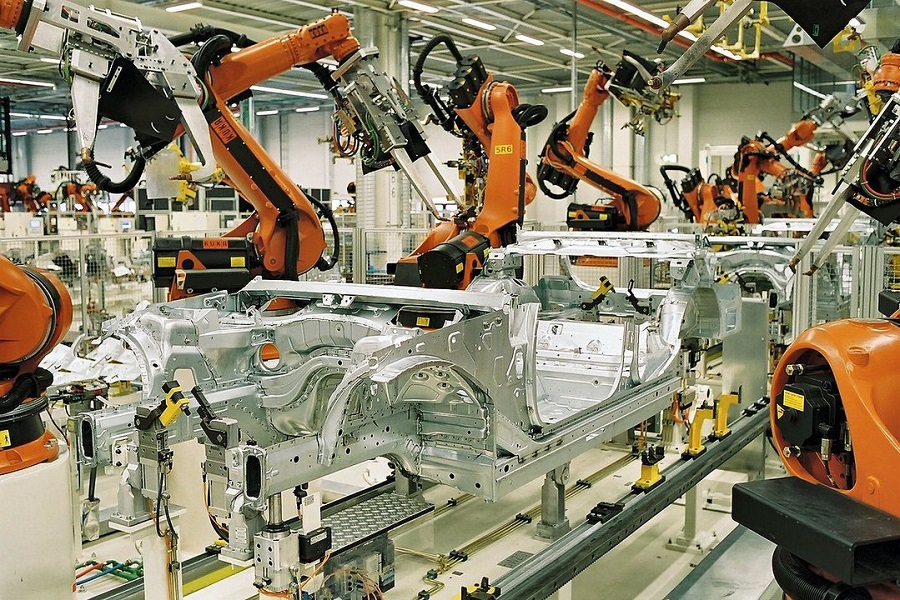
The manufacturing sector is undergoing its most profound structural shift since the introduction of assembly-line automation and digital computation. Known as Industry 4.0 or the Fourth Industrial Revolution, this transformation blends physical industrial assets with advanced digital computing, pervasive connectivity, and intelligent automation.
Rather than merely running isolated machines faster, modern manufacturing plants operate as fully integrated, cyber-physical ecosystems. Operational data flows seamlessly from individual machine sensors to enterprise resource platforms and global supply chains. This transition enables manufacturers to improve production efficiency, reduce equipment downtime, customize products at scale, and respond dynamically to unpredictable supply and demand shocks.
The Technological Pillars of Industry 4.0
Industry 4.0 is not a single isolated technology, but an architecture powered by several interconnected technological systems working in tandem.
-
Industrial Internet of Things (IIoT): Pervasive networks of low-latency sensors attached to industrial assets that capture and transmit real-time telemetry such as thermal output, vibration signatures, spindle speeds, and energy consumption.
-
Cyber-Physical Systems (CPS): Engineered mechanisms controlled or monitored by computer-based algorithms, bridging the gap between mechanical hardware and digital control infrastructure.
-
Cloud Computing and Edge Analytics: Hybrid compute architectures that process time-sensitive data directly on the factory floor via edge gateways while storing vast operational datasets in cloud platforms for longitudinal analytics.
-
Artificial Intelligence and Machine Learning: Algorithmic systems capable of analyzing millions of production data points in real time to spot micro-anomalies, predict failures, and optimize complex operational variables.
-
Additive Manufacturing: Industrial 3D printing systems that produce complex geometric components on demand without requiring custom tooling or extensive assembly steps.
-
Digital Twins: Virtual software representations of physical assets, assembly lines, or entire production facilities that mirror their physical counterparts in real time.
Integrating these technologies transforms static production facilities into agile, self-correcting manufacturing environments.
Transforming Maintenance: From Reactive Repairs to Predictive Precision
Historically, plant managers relied on two primary maintenance philosophies: reactive maintenance, where machines are run until failure, or preventative maintenance, where parts are replaced according to arbitrary time schedules. Both models introduce immense waste in the form of catastrophic downtime or discarded components that still have operational lifespan remaining.
Industry 4.0 establishes the era of condition-based predictive maintenance.
Real-Time Asset Health Monitoring
Sensors placed on critical machinery continuously record acoustic patterns, vibration variances, operating temperatures, and electrical draw. Machine learning algorithms analyze these telemetry streams against baseline operating profiles.
When a bearing begins to degrade or a drive belt loosens, the anomaly generates subtle vibrational signatures weeks before a physical breakdown occurs.
Eliminating Unplanned Line Stoppages
Predictive maintenance systems automatically generate work orders, reserve replacement inventory, and schedule technician repairs during planned shift turnovers or low-production windows.
This approach minimizes catastrophic assembly line halts, extends the operational lifecycle of multi-million-dollar capital assets, and reduces surplus spare parts inventory on plant shelves.
Enhancing Quality Assurance and Yield Optimization
Traditional quality assurance relies heavily on manual inspections and statistical batch sampling at the end of the production cycle. When a defect is discovered at the final stage, an entire batch of finished goods must often be scrapped or reworked at significant expense.
Computer Vision and Automated Inspection
High-resolution industrial cameras paired with edge-based deep learning models inspect goods at full production speed along the assembly line. These vision systems identify microscopic surface fractures, paint inconsistencies, incorrect fastener placements, and dimensional deviations instantly. Defective components are mechanically diverted off the line immediately, preventing wasted materials from moving further through downstream processing.
Closed-Loop Parameter Adjustment
Industry 4.0 facilities utilize closed-loop feedback systems where inspection data directly recalibrates upstream machinery. If an automated vision sensor detects that component dimensions are trending toward the edge of acceptable engineering tolerances, the system automatically sends compensation commands to the computer numerical control (CNC) cutting tools to adjust parameters before defective parts are produced.
Operational Flexibility and Mass Customization
In legacy production environments, reconfiguring an assembly line to produce a different product variation requires hours or days of manual tooling changes and line rebalancing. Industry 4.0 provides the agility needed for cost-effective mass customization.
Modular and Software-Defined Assembly Lines
Modern production cells utilize flexible robotics and automated guided vehicles (AGVs) rather than rigid, fixed-rail conveyor belts. Autonomous mobile robots dynamically transport parts between independent workstations based on the specific configuration required for each unique order.
As a product arrives at a workstation, radio-frequency identification (RFID) tags inform the robotic manipulators which specific components to install and which torque specifications to apply.
Rapid Prototyping and Tooling via Additive Manufacturing
Industrial 3D printers allow manufacturing teams to design, iterate, and manufacture custom jigs, fixtures, and replacement brackets on site within hours. Eliminating the weeks-long lead times traditionally required to cast or machine custom steel tooling enables plants to introduce product revisions and custom runs rapidly without disrupting standard high-volume lines.
Worker Safety and Workforce Evolution
The integration of advanced technology fundamentally alters the role of human workers in manufacturing facilities, shifting manual labor toward high-skill technical oversight.
-
Collaborative Robots (Cobots): Unlike traditional industrial robots that operate inside caged enclosures for human safety, cobots feature force-limiting sensors and soft edges that allow them to work safely alongside human operators, taking over repetitive lifting and dangerous positioning tasks.
-
Augmented Reality (AR) in Operations and Training: Technicians equipped with AR headsets receive interactive, overlaid step-by-step schematics directly in their field of vision while performing complex mechanical maintenance or wiring harnesses, reducing operational errors and onboarding times.
-
Safer Work Environments: Automated monitoring of environmental hazards, toxic gas levels, and thermal conditions protects frontline workers by automatically halting operations or triggering ventilation systems before safety limits are breached.
Frequently Asked Questions
What are the main obstacles companies face when transitioning to Industry 4.0?
The primary obstacles include the high initial capital investment required for modern hardware, difficulties integrating legacy machines that lack digital communication interfaces, internal cybersecurity vulnerabilities, and a widespread shortage of personnel with combined expertise in industrial engineering and data science.
How do manufacturers connect decades-old legacy machinery to modern digital networks?
Plants utilize non-invasive retrofit sensor kits and industrial edge computing gateways. By attaching external vibration, acoustic, and thermal sensors directly to older machines without altering internal electronics, companies can extract operational data and transmit it to modern industrial analytics platforms.
How does Industry 4.0 change operational cybersecurity requirements?
Traditional manufacturing plants relied on an air gap, meaning operational technology was physically disconnected from the internet and corporate IT networks. Because Industry 4.0 connects operational machinery directly to enterprise clouds and supply chain networks, plants must implement zero-trust network architectures, strict endpoint authentication, continuous network anomaly monitoring, and micro-segmentation to prevent cyberattacks from infiltrating production floors.
What is the role of digital twins during the product design and testing phase?
Digital twins allow engineering teams to simulate how physical materials, mechanical components, and robotic cells will behave under real-world operating stresses, thermal loads, and production speeds before constructing physical hardware. This simulation reduces the cost and time associated with building physical prototypes.
How does Industry 4.0 contribute to environmental sustainability and energy management?
Industrial IoT networks monitor the real-time power, water, and compressed air consumption of individual workstations. Plant management can identify energy leaks, optimize high-power machinery usage during off-peak tariff hours, minimize raw material scrap through precise quality control, and track carbon emissions at the individual product level.
What is the difference between automated manufacturing and smart manufacturing?
Automated manufacturing involves machines executing pre-programmed, repetitive physical tasks without deviation or context awareness. Smart manufacturing incorporates real-time data collection, automated decision-making, and machine learning, allowing systems to monitor their own performance, adapt dynamically to changing variables, and communicate autonomously with other assets across the plant.
How does the deployment of 5G private networks impact Industry 4.0 environments?
Private industrial 5G networks provide ultra-reliable low-latency communication, massive device connection density, and high bandwidth within the facility. This enables hundreds of autonomous mobile robots to navigate floors safely, supports real-time closed-loop machine control, and eliminates the physical ethernet cabling traditionally required to connect factory equipment.
